Editing, still
I entered 2026 wanting to live less by drift and more by intention. That has turned out to be a quieter ambition than I imagined, and a harder one. It comes in smaller humiliations, smaller clarities. In realizing how often a life is not transformed at once but gathered, slowly, by what one returns to.
January and February gave me blue. Not only sadness, though some of that too.
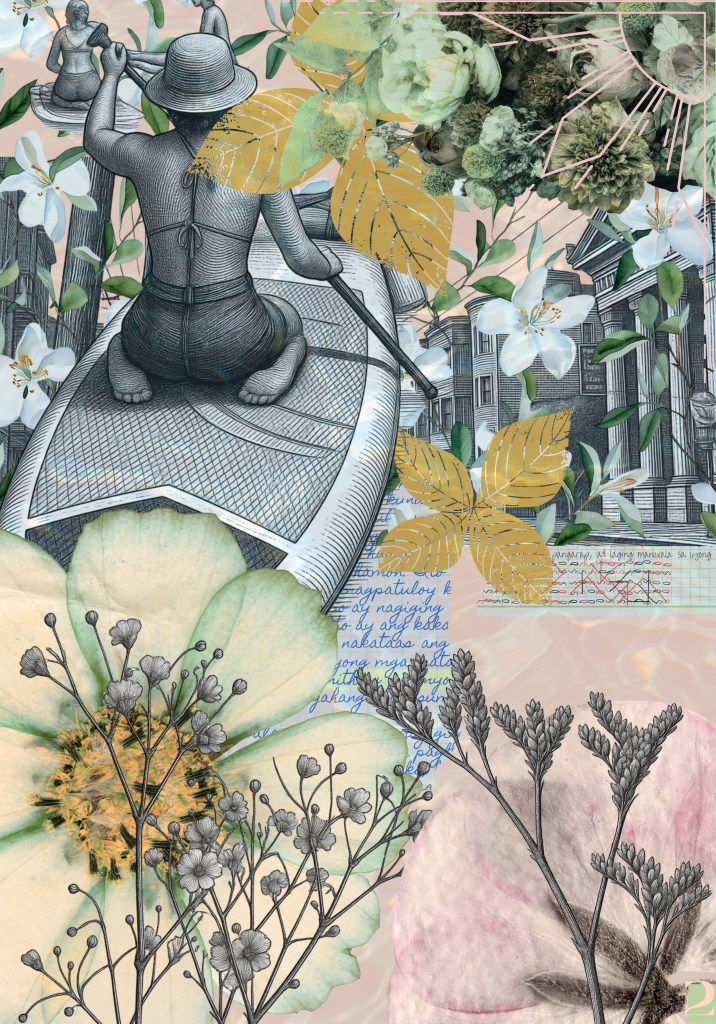
More like the tint that settles over a city when you are trying to take your own life seriously and it keeps answering back with more life than you can hold in one sitting. Blue like buses passing in rainlight. Blue like old bruises that no longer hurt but have not yet disappeared. Blue like wanting. Blue like proof. Blue like don’t think it’s limerence / it felt imminent from the beginning. Blue like Valentine’s Day arriving while grief is still midair, refusing to land.
This issue was made in that weather.
Lately, I have been trying to understand what it means to live as one woman with several desks pulled up inside her, each with its own papers, its own small lamp, its own unfinished labor. At one desk, I am a mother, trying to define respect for a little boy still sweet enough to need to be hugged to sleep, still young enough to ask for softness, and already old enough to need more from me than the excuse of he’s just a kid. He starts kindergarten in August, and already my mind runs ahead of us: to his hearing, his friendships, his language, his body moving through classrooms and playgrounds and all the little republics of childhood. I want him to speak Tagalog. I want him to know that books and drawing and the stories he invents in his own head are not side interests, not decorations around a real life, but part of the real life itself.
Asked for a sign and,
God, you’re drowning me. Good thing:
I know how to swim
At another desk, I am trying to become a more rigorous journalist. I am learning how to stay awake in rooms full of strong opinions and stronger egos, how to edit without flattening, how to assign, how to think in timelines and follow-ups and the shape of a question before it hardens into argument. I am learning how to love the machinery of reporting without letting it make machinery of me. And all the while I feel my life pulling in two directions: toward staying and reporting here in the Bay, where I know the texture of things by touch, and toward the older dream, the farther one, of becoming a correspondent, maybe in D.C., maybe in Boston, those cities I have researched for so long they feel almost like premonitions.
At another desk still, I am trying to remain romantic without becoming self-abandoning. This may be one of the private studies of the year: how to let intimacy arrive without signing over the deed. How to be earnest and perceptive and still keep my feet under me. How to resist turning every tenderness into mythology simply because I am, by nature, a pattern-recognition kind of lover girl. I do not want to live as if love and care are rare minerals that must be hoarded when found. I also do not want to confuse access with permanence, or attention with devotion, or being seen with being kept. Perhaps that is the real curriculum beneath everything else right now.
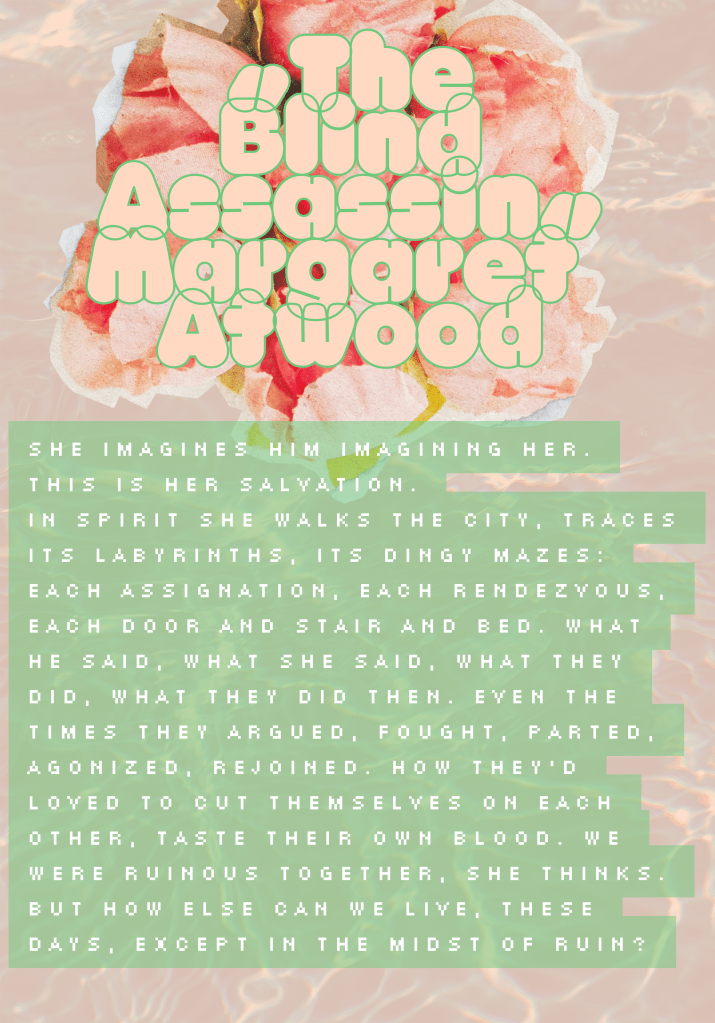
Don’t think it’s limerence
It felt imminent
From the beginning
Begin mining perceptions, perfections

Blue skies, undermining evergreen
Reflecting on me, the myth
You, the mirth, a renaissance

Blue Valentine, happy valentine
Blue in your eyes, my valentine
Every art you’ve seen
In every form you accept
A bird, my love bird
So this issue opens in fiction, because fiction remains one of the truest ways I know to test a feeling until it reveals its social structure. These stories move through daughters and hunger, mothers and distance, class and inheritance, fatigue and desire, city loneliness and the intimate little mythologies people build just to survive themselves. They are interested in the private life, yes, but never as something sealed off from the world. Always the room opens onto something larger: money, migration, family, labor, gender, shame, longing, the strange economies of care.
Then the issue turns toward reporting, which in this magazine moves in distinct beats because my mind does too. Beyond the Lobby begins here as an opening proposition, a field guide, and a first San Francisco installment: living notes toward a body of work on hotel labor, migration, housing, service, and what it costs to survive inside the polished comfort of other people’s ease. SOMA moves differently, asking what it means for public education to disappear from downtown and what kinds of loss are misnamed as administrative adjustment when they are, in fact, civic diminishment. And Raising Literal Kids bends toward literary nonfiction, toward that intimate border where reporting and memory sit close enough to trouble each other, and where one life begins to reveal the weather system around it.
It ends in reading, because reading is still the room I return to when I want to know who I am becoming. It is where I test my taste, correct my instincts, enlarge my company. Sigrid Nunez, Banana Yoshimoto, Eve Babitz, Maugham, which are not random presences but part of the longer conversation I want this publication to live inside. They bring me wit without cruelty, grief without spectacle, glamour with a pulse beneath it, and the old recurring question of what it means to make a life that is not only endured, adorned but actually inhabited.
I think I am building this magazine the same way I am building a life: with too many tabs open, a child nearby, coffee cooling somewhere I forgot it, a notebook full of poems and deadlines, and an unreasonable but necessary faith that all of it belongs to the same future. That tenderness and fact do not have to be enemies. That criticism can still have pulse. That reporting can still have soul. That a woman can be multiple and remain whole.
This is practice in public attention. Practice in arrangement. Practice in becoming the kind of writer who can move between witness and yearning without betraying either one. Late winter has been asking me to get clearer.
About work. About language. About love. About what I owe my son. About what I owe myself.
So here is the first issue: part notebook, part field report, part reading life, part proof that I was here, trying.
A tulip on two lips for my babes.
A little blue still left in the sky.
And a woman, still becoming, trying to keep all her desks in the same room.
fictions in this issue:
These stories move through the fault lines of intimacy, class, migration, and family, following characters who live inside compromised forms of care: the absent mother who provides from afar, the family that protects the wrong person, the grieving household that makes room for someone not quite its own, the beautiful homeland altered by return and possession, the woman who cannot tell whether she is unraveling or simply seeing her life clearly.
Set across San Francisco, Madrid, cruise ports, immigrant homes, and privatized islands, the collection is concerned with belonging in its most unstable forms. Again and again, its characters confront the same question: what does it mean to be loved by people, places, and structures that cannot hold you cleanly?
- short story: Eggplant Mornings (2019)— From The Bed Jar
- flash fiction: In Madrid, Again (2026)— From Love&Lovers
- a short excerpt from a full novel: Chronic Conflicts (2025)— From “The Marist Quartet: Lilla” collection
- flash fiction: Maya’s Uncle Bobby Antonelli (2014)
- short story: Kismet (2026)—From “The Marist Quartet: Savannah” collection
- short story: Doves on Dover Lane (2026)—From Alon
- flash fiction: On the Dock (2026)—From TNT—Tender Not Temporary
- short excerpt from a full novel: Three Mothers and A Motherless Daughter (2025)—From TNT—Tender Not Temporary
